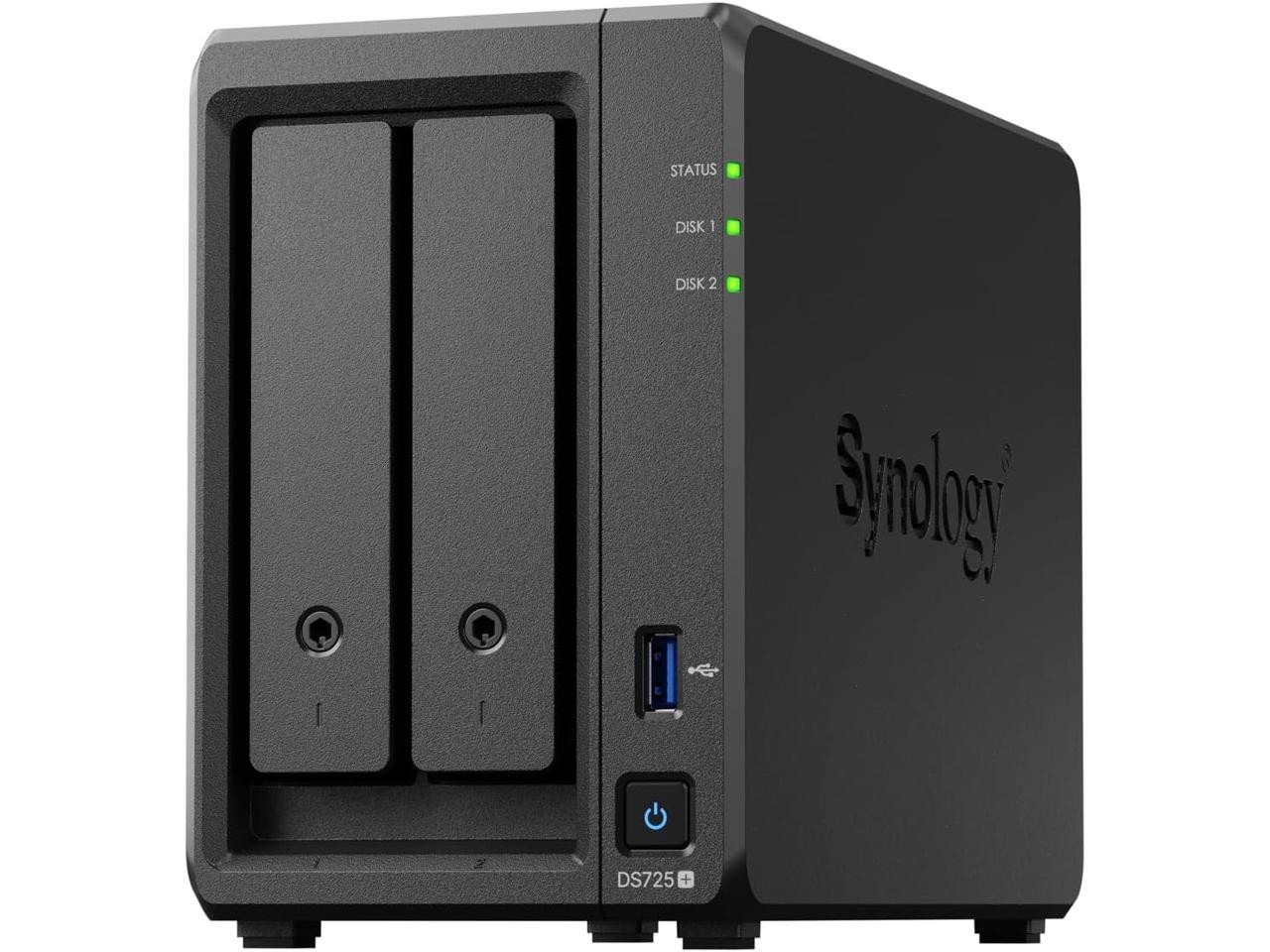
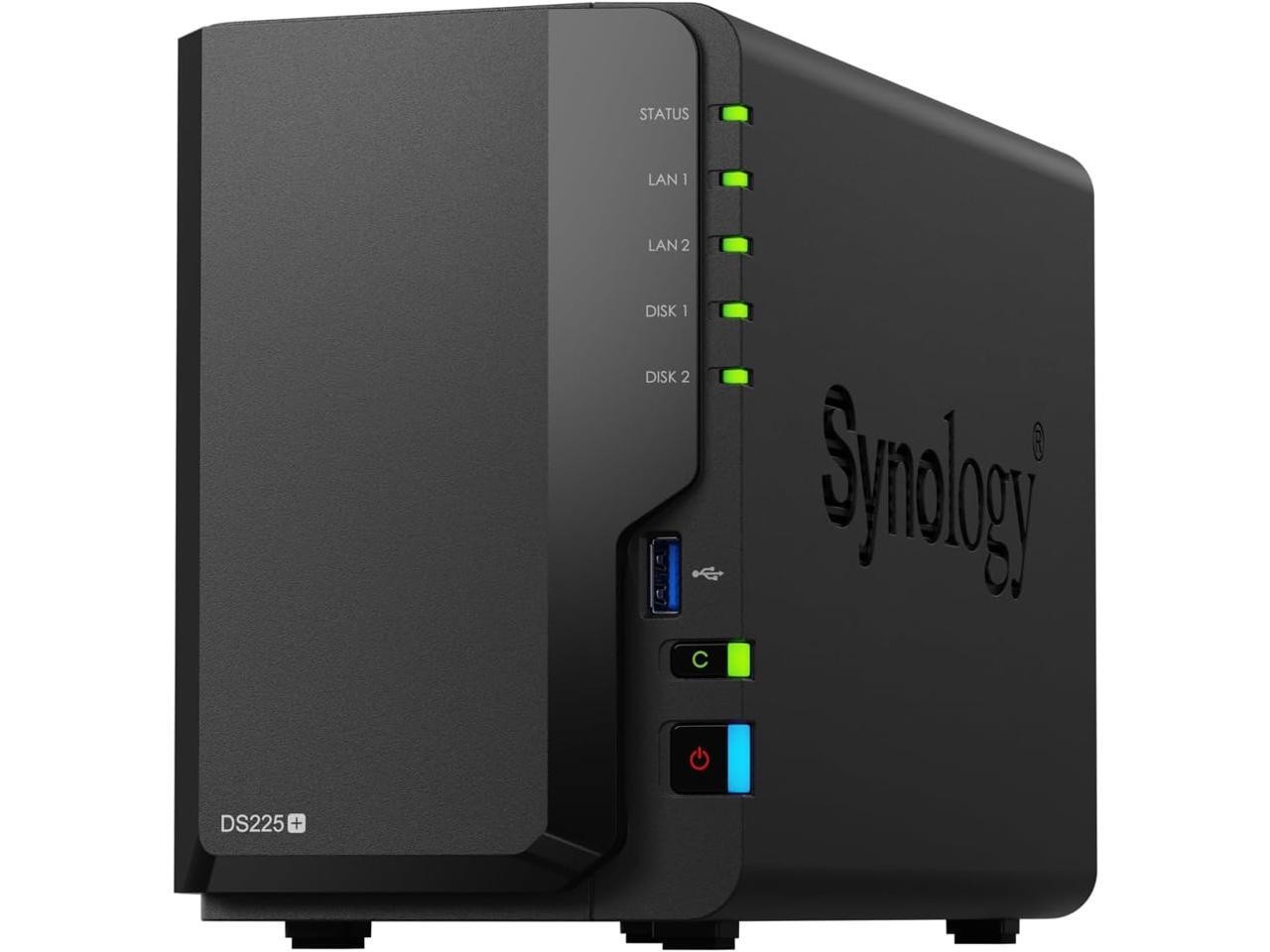
If you're shopping for a 2-bay network-attached storage system in the storage NAS networking space, a key decision is how much computing headroom you need today and how much you might want tomorrow. Both Synology DiskStation options here are diskless, meaning your drive purchase is separate from the NAS itself. Both units share the same 2-bay desktop form factor, so the main differences are internal hardware and operating characteristics.
Quick Verdict
Think about whether your main tasks are file backups and media streaming or more intensive workloads. The Synology DS725+ is listed at USD 560.99 and steps up with an AMD Ryzen R1600 processor, 4GB DDR4 with ECC, and support for up to 32GB. The Synology DS225+ is listed at USD 372.49 and offers a streamlined feature set. If you plan to run more demanding storage tasks or want memory room to grow, the DS725+ is the stronger match. If your priority is an efficient NAS for everyday use, the DS225+ fits. If you tend to keep a NAS for several years, the DS725+ offers more room to adapt.
Comparison Snapshot
| Product | Listed Price | Price Indicator | What stands out |
|---|---|---|---|
| Synology DS725+ Diskless System Network - Storage | USD 560.99 | AMD Ryzen R1600, 4GB DDR4, two SODIMM slots, max 32GB, RAID 0/1/5/6/10/JBOD | |
| Synology DS225+ Diskless System Network - Storage | USD 372.49 | 2GB DDR4, backup/streaming focus, lower power draw |
Where Each Product Wins
- The DS725+ is the better match when your storage needs are likely to grow.
- The DS225+ is the better match when you want a simple, everyday NAS.
Synology DS725+ Diskless System Network - Storage
The Synology DS725+ Diskless System Network - Storage is the 2-bay desktop NAS for users who want more capability from the start. It includes ECC memory, a meaningful plus if you value data integrity in memory. The two SODIMM slots give you room to expand, and the listed RAID support covers 0, 1, 5, 6, 10, and JBOD. That combination makes it a stronger fit for multi-user setups or applications that rely on the NAS. The limitation is that it is diskless, so you must buy drives separately. The extra memory headroom only pays off if your workload actually grows into it. For a home office or small team, this is the model that leaves less performance on the table.
Synology DS225+ Diskless System Network - Storage
The Synology DS225+ Diskless System Network - Storage is a leaner 2-bay NAS with a clear focus on backup, streaming, and personal cloud use. Its power draw is listed at 16.98W during access and 6.08W in HDD hibernation, which suits an always-on home setup. For a typical home network, this means you can leave it running without worrying too much about energy use. The limitation is that the specification centers on a 2GB memory configuration, which points toward straightforward storage needs rather than heavy multitasking. If your plans stay simple, that may be enough; if you expect heavier usage, the DS725+ gives you more documented headroom. As a diskless system, it also requires you to supply your own drives.
Final Choice by Use Case
- For heavier workloads and upgrade headroom: choose the Synology DS725+.
- For an efficient, everyday NAS: choose the Synology DS225+.